
Tahlequah Creek
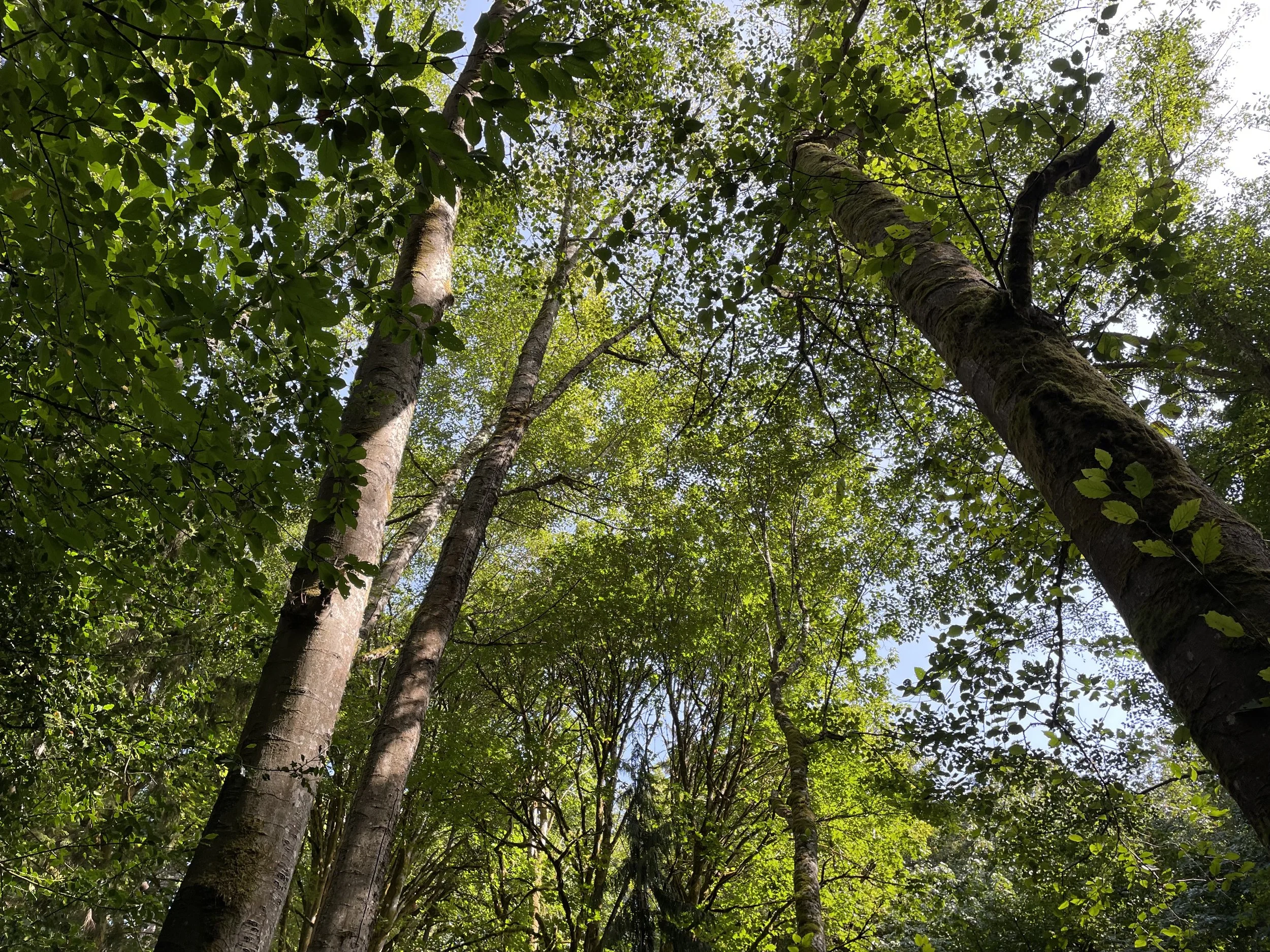
Nestled in a ravine just west of the ferry line, Tahlequah Creek is one of the Island’s largest. This steep geography has largely prevented development in the watershed. The ravine is one of the wildest places on Vashon – big leaf maple and red alder are more common in the lowlands, while douglas firs, 40 topping out over 150 ft, are dominant in the upland forests. The stream is a vital corridor for critters of all shapes and sizes, and a crucial place for aquifer recharge.
The sx̌ʷəbabš people called this area qwu?ali, which translates to “gathering something together.” This was a longhouse site where multiple groups convened – perhaps to gather cattails and berries or harvest the fall salmon runs. This location was also a prime place to launch canoes to visit neighboring communities.
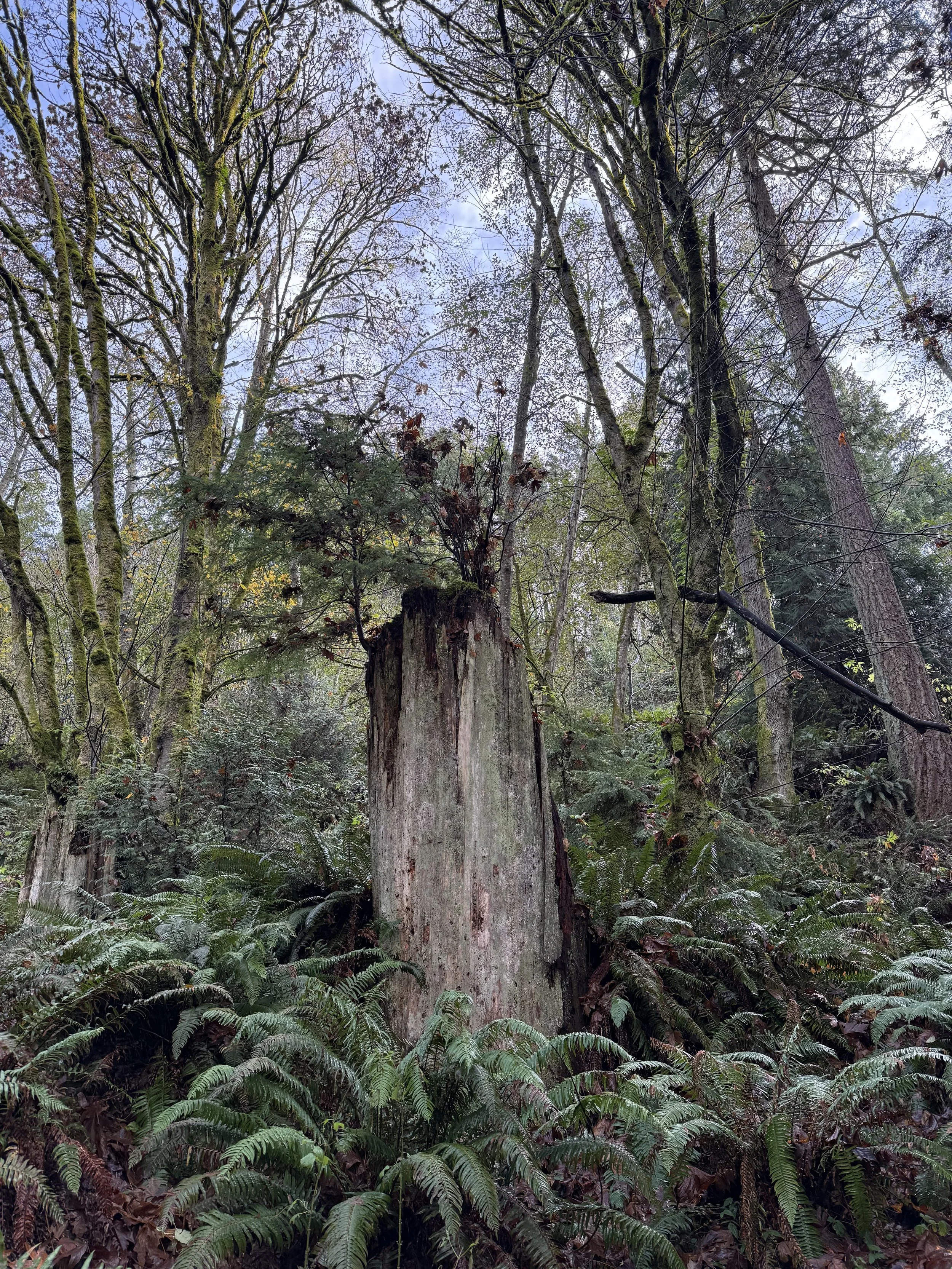
The story of the preserve can be marked in the forests. Centuries old cedar stumps are a stark reminder of the impact of logging and colonization in this wild ravine. These notched stumps are impressive landmarks, and now, they shepherd tiny conifers and native plant seedlings, the beginnings of the next generation of old growth forest.
In 2023, the Land Trust purchased the first 10 acres of the southernmost section of the creek, and each subsequent year has closed on purchases to expand the preserve. Today, the Tahlequah Creek Preserve spans 35 acres, with 3600 protected feet of creek.
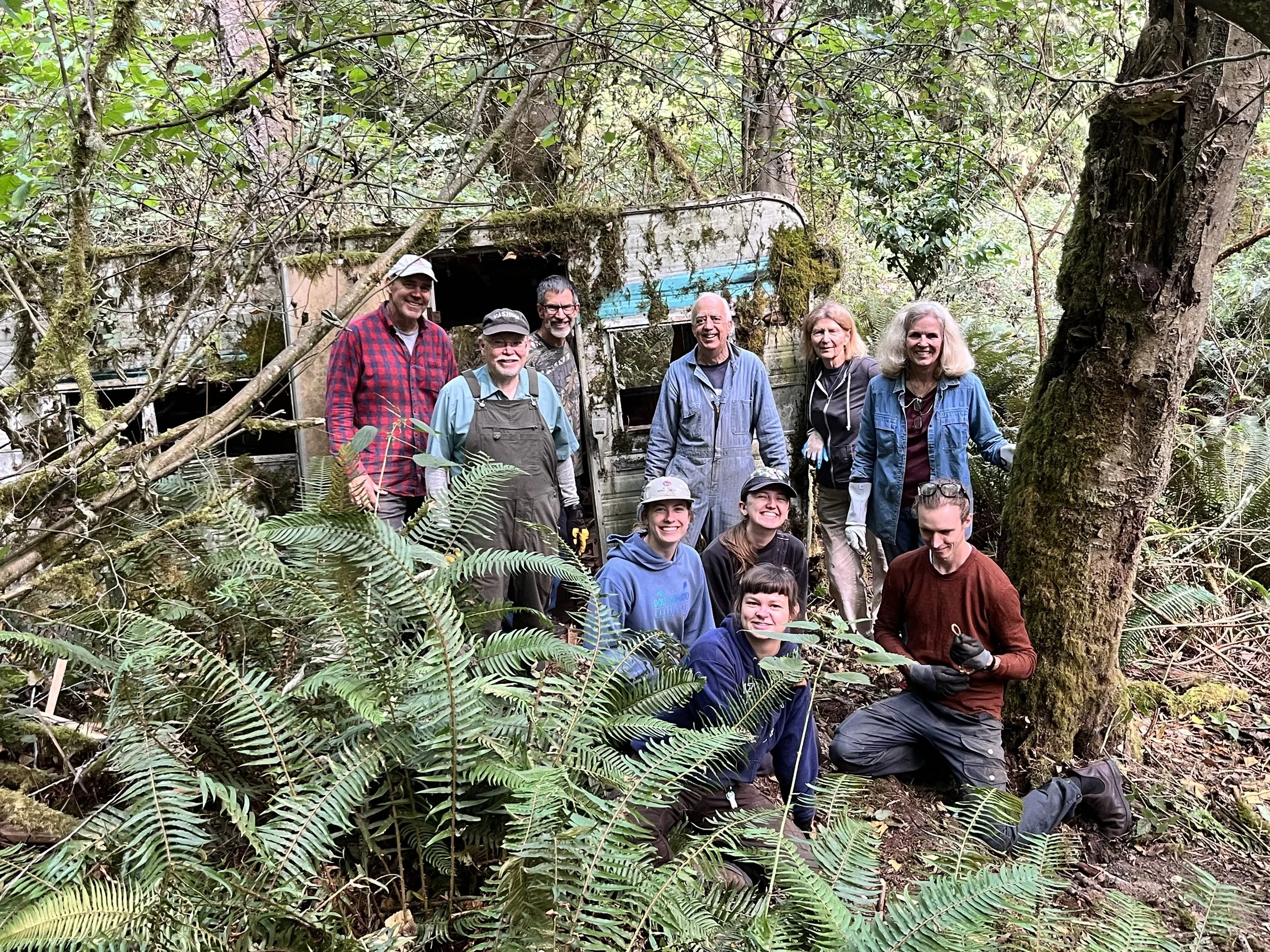
Restoration of this watershed began with the first purchase in 2023. Like many restoration projects, the team’s first step was cleanup. The Land Trust’s Stewardship team salvaged and recycled 40 tons of trash and concrete debris, some of it in direct contact with the creek. The haul included a dilapidated trailer, lawn chairs, and an old tractor lodged among the ferns near the banks of the creek. Once the area was clear, it was time to start tackling invasives. The forest in this ravine is overall in good shape, but there is pressure from holly, blackberries, ivy, and laurel. Our volunteers climbed up the slopes of the ravine to remove as much as possible. Today, what once was a clearing for a dilapidated home is a nursery for dozens of native trees and shrubs, growing a little more everyday to take their spots in the canopy.
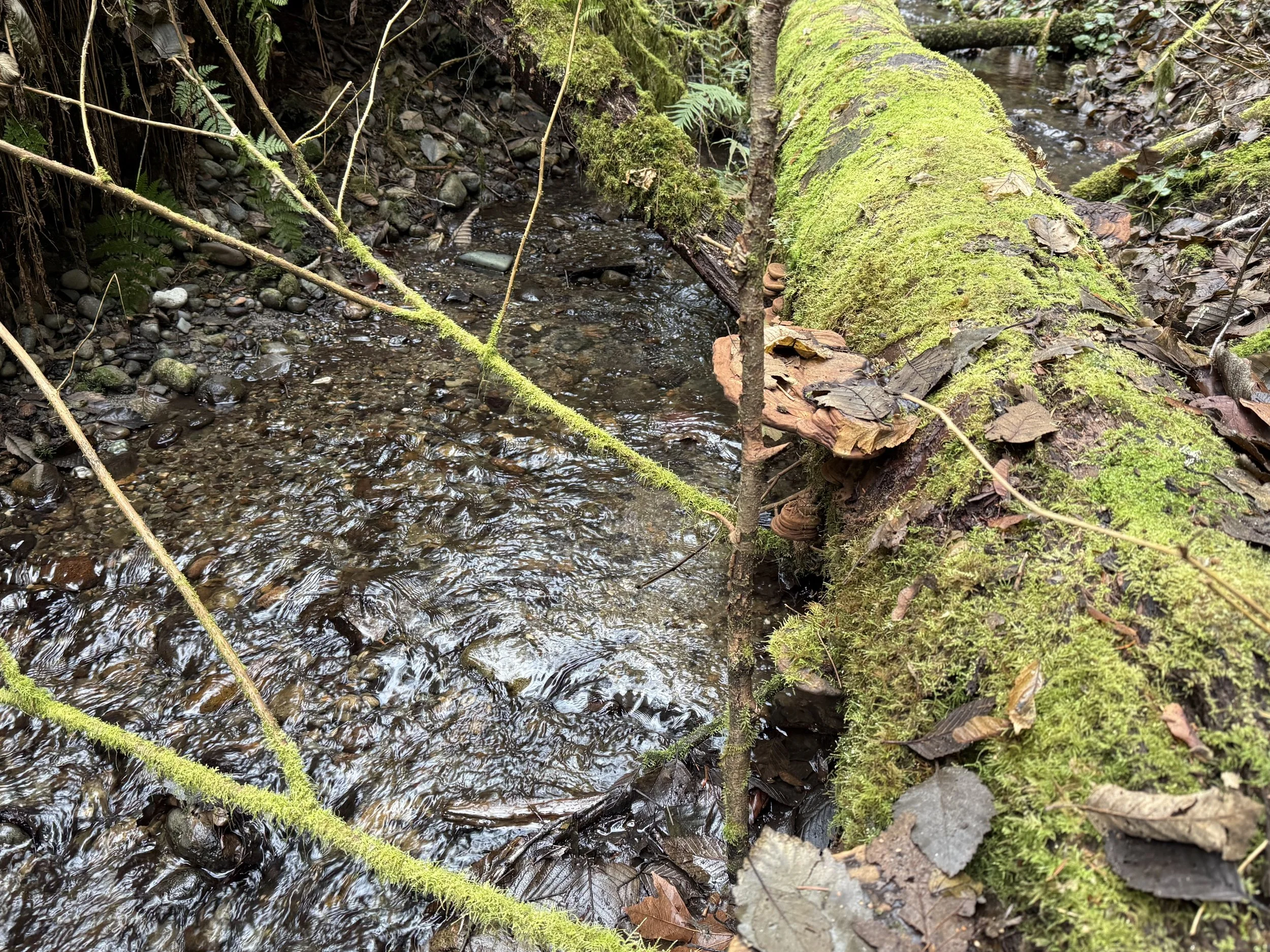
Now that restoration in the forest has gotten a good head start, we can start dreaming about the future. The low gradient reaches of Tahlequah Creek are the best places to add wood structures (like beaver dam analogs) which can create wide swaths of wetlands without endangering homes or structures. Meanwhile, the wetlands can help recharge the aquifer and create more habitat for stream bugs whose presence means more food for our native salmonids – particularly searun cutthroat trout.

Access:
Tahlequah Creek does not have trails at this time.